
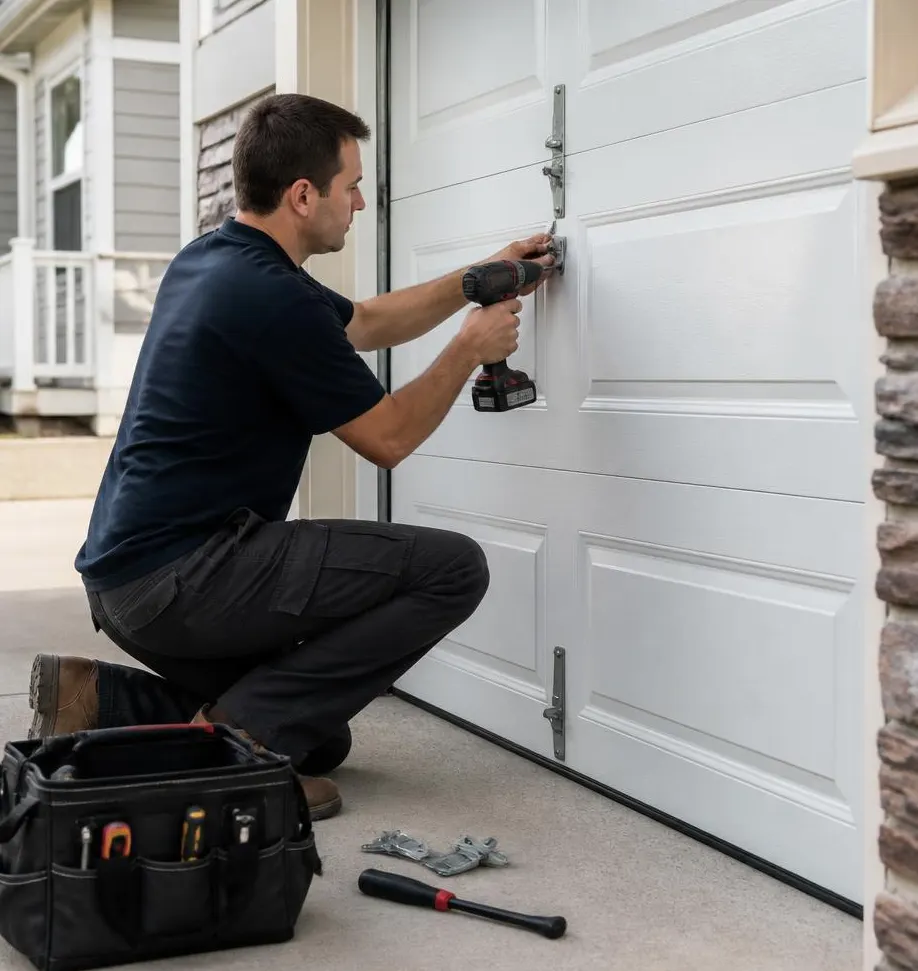
Get Your Bellwood Garage Door Ready Before the First Freeze
Rule of thumb: if your garage door looks and sounds normal in October, give it one thorough once-over before the first hard freeze, because cold locks small problems in place for months. The exceptions are doors that are already grinding, sagging, or slow to close, drafty garages that share a wall with living space, and any door that hasn't been lubricated or inspected since last spring. Those need attention now, not after the first snow.
Why Cold Actually Breaks Garage Doors
Illinois winters put real mechanical stress on a garage door system, not just cosmetic wear. Steel panels and tracks contract in the cold, which can turn a slightly misaligned track into a door that binds or jumps off its rollers. Lubricant that worked fine in July thickens in freezing temperatures, adding drag to rollers, hinges, and the opener motor. Torsion and extension springs lose some flexibility as steel gets colder, so a spring that was already fatigued is far more likely to snap in January than in August. On top of that, road salt and slush tracked in on tires and boots accelerates rust on tracks, hinges, and the bottom of steel panels, especially during the freeze-thaw cycles typical of this area.
The Fall Walk-Around Checklist
Set aside twenty minutes on a dry day and work through the door from the ground up:
- Weatherstripping: Check the rubber seal along the bottom of the door and the vinyl strips along the sides. Cracked or flattened seals let in cold air, moisture, and the salty slush that corrodes metal.
- Panels and bottom edge: Look for rust spots, dents, or gaps where the door meets the floor. Even a small gap lets wind-driven cold air into an attached garage, which matters a lot during this region's big seasonal temperature swings.
- Tracks and rollers: Clear out summer debris and wipe down the tracks. Rollers that are cracked, flat-spotted, or noisy should be replaced before cold makes the plastic more brittle.
- Hardware: Tighten loose bolts on the track brackets and hinges. Vibration loosens these over a season, and a loose bracket under winter stress can let a track pull away from the wall.
- Lubrication: Use a silicone-based garage door lubricant (not household oil, which gums up in the cold) on hinges, rollers, and the torsion spring. Skip the bottom seal track, which doesn't need it.
- Balance test: Disconnect the opener, lift the door halfway by hand, and let go. It should stay roughly in place. If it drops or shoots up, the springs are out of balance and need a professional look.
- Auto-reverse test: Place a block of wood in the door's path and close it. It should reverse on contact. This matters more in winter, when icy thresholds and stiff springs change how the door behaves.
Springs: The Part People Ignore Until It Breaks
Spring failure is the most common emergency call this time of year, and it's almost always preventable. Watch for a door that feels heavier than usual when opened manually, a loud bang from the garage (often the spring letting go), or visible gaps in the coils of a torsion spring. Most residential doors are rated for a set number of open-close cycles, and age plus cold stress is what finally pushes a worn spring past its limit. Springs are under extreme tension and are not a do-it-yourself repair; a spring that's improperly replaced can cause serious injury. If a spring looks stretched, rusted, or unevenly wound, that's a job for spring replacement before the cold makes the steel more likely to snap outright.
Openers, Sensors, and Batteries
Cold temperatures drain battery backups faster, so test yours now rather than during a winter power outage. Wipe down the photo-eye sensors near the floor on each side of the track; condensation and road grime build up here and can cause a door to refuse to close or reverse for no obvious reason. If your opener has been struggling or making a different sound than it used to, fall is also a reasonable time to consider a garage door opener installation rather than nursing an aging motor through another winter.
When to Call Bellwood Garage Door Specialists
If your door is unbalanced, a spring looks stretched or rusted, the door is slow or noisy despite fresh lubrication, or you just want everything checked before winter hits, that's when it makes sense to bring in a professional. Our garage door maintenance visits cover the full inspection above, plus adjustments to tension, tracks, and hardware that aren't safe or practical as a homeowner project. If a spring has already failed or a door is stuck shut overnight, our emergency garage door service is built for exactly that kind of cold-weather breakdown. Call Bellwood Garage Door Specialists today to get your garage door ready for winter in Bellwood, IL.